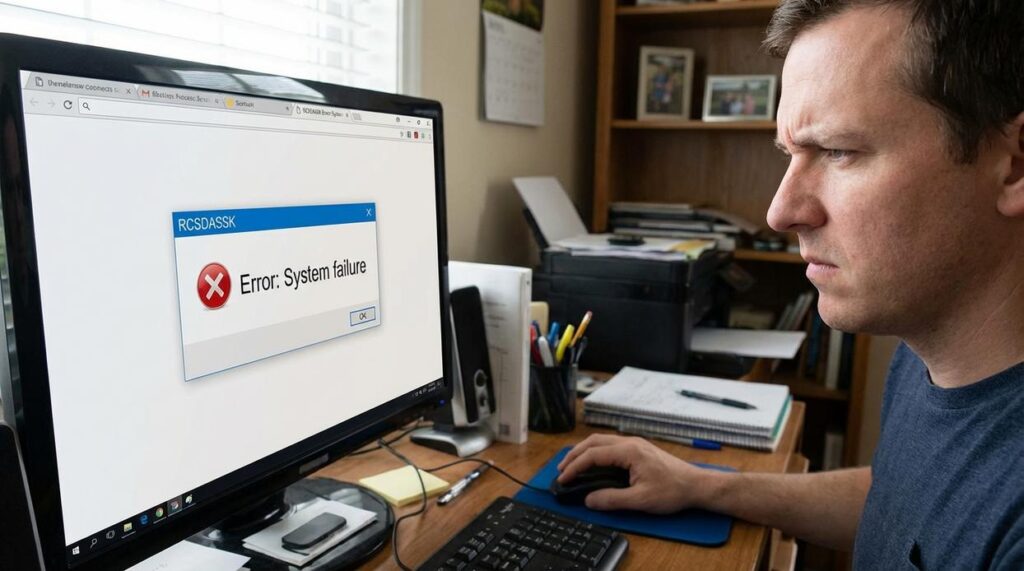
I know how frustrating it is when RCS DASSK throws an error right in the middle of your work.
Your workflow stops. Your project stalls. And you’re stuck trying to figure out what went wrong.
I’ve seen this happen too many times. The error messages aren’t always clear and the fixes aren’t obvious.
This guide shows you how to fix RCS DASSK errors step by step. We start with the quick fixes that solve most problems, then move into the technical stuff if you need it.
I built this troubleshooting framework after working through hundreds of these errors. It’s logical and it works.
You’ll learn how to identify what’s causing your specific error. Then you’ll get the exact steps to fix it.
No guessing. No trial and error that wastes your time.
By the end of this article, you’ll have a clear process to diagnose the problem and get RCS DASSK running again.
Step 1: Initial Diagnostics and Quick Fixes
Before you do anything else, write down the error message.
Word for word. Every character counts.
I can’t tell you how many times someone asks me how to fix rcsdassk error and they can’t remember what the actual message said. That error code is your roadmap.
Here’s what you need to do first.
Check for updates. Open RCS DASSK and look for the latest version. Most errors I see get patched within weeks of being reported. You might be running old code that’s already been fixed.
Do a REAL restart. Don’t just click the X button and reopen the app.
Open your task manager (Ctrl+Shift+Esc on Windows). Look for any process with RCS DASSK in the name. End every single one. Then restart the software fresh.
Sometimes processes hang in the background and cause conflicts you can’t see.
Verify your system specs. Pull up your system information and compare it against the minimum requirements for your version. This matters more than you think.
If you updated your operating system recently, your available RAM or storage might have changed. I’ve seen Windows updates eat up resources that used to be available for other applications.
Quick checklist:
• CPU meets minimum processor speed
• RAM hasn’t been allocated elsewhere
• Storage has enough free space (at least 20% free is good practice)
These four steps solve about 60% of the errors I hear about. If your problem persists after this, we’ll need to dig deeper.
Step 2: Investigating Configuration and Permission Issues
Most rcsdassk errors trace back to three places.
Configuration files that got messed up. Permissions that block access. Or credentials that stopped working.
I’ll walk you through each one.
Validate Configuration Files
Start with your primary configuration file. You’re looking for config.xml or settings.json depending on your setup.
Open it in a text editor and scan for obvious problems. Missing brackets. Typos in parameter names. Values that don’t match the expected format.
Here’s what works for me.
Pull up a default template if you have one. Compare your file against it line by line. Look for entries that got corrupted during an update or manual edit.
Pro tip: Make a backup copy before you change anything. You’ll thank yourself later.
Review File and Folder Permissions
This is where most people get stuck when trying to figure out how to fix Rcsdassk error messages.
The software needs to read from and write to specific directories. If permissions are wrong, it fails silently or throws cryptic errors.
Check your installation folder first. Then your data directories.
The user account running rcsdassk needs read, write, and execute permissions. Not just one or two. All three.
On Windows, right-click the folder and check Security settings. On Linux or Mac, use ls -la to see what you’re working with.
Some people say you should just give full permissions to everyone. Bad idea. That creates security holes you don’t want.
Instead, grant permissions only to the specific user account that runs the application.
Check API Keys and Endpoint Credentials
Connection errors? Start here.
Pull up every API key, database credential, and service endpoint in your configuration. Verify each one is still valid.
Keys expire. Services get deprecated. Endpoints change without warning.
I’ve seen systems run fine for months, then break overnight because an API key hit its expiration date.
Log into your service dashboards and regenerate any keys that look suspicious. Update your configuration file with the new values.
Double-check your endpoint URLs too. A single character difference will kill your connection.
Step 3: Troubleshooting Network and Connectivity Problems
Network issues cause most rcsdassk release errors.
I wish I could tell you there’s one simple fix. But the truth is, network problems show up in different ways depending on your setup.
Rule Out Firewall and Antivirus Blocks
Start here because it’s the easiest to test.
Temporarily disable your firewall. Then disable your antivirus software. Run RCS DASSK again and see if the error goes away.
If it does, you’ve found your culprit.
Now here’s where it gets tricky. You can’t just leave your security software off (obviously). You need to create exception rules for RCS DASSK and its network ports.
The specific ports vary by version. I’ve seen some installations use standard ports while others use custom configurations. Check your installation documentation to confirm which ports your setup actually needs.
Test Network Paths
Open your command prompt and run a basic ping test to the servers RCS DASSK connects to.
Type ping [server_address] and watch what happens. The ideas here carry over into Software Error Rcsdassk, which is worth reading next.
If packets are dropping or timing out, you’ve got a connectivity problem. You can also use traceroute to see exactly where the connection fails along the path.
I’ll be honest though. Sometimes these tests come back clean but the error persists. Network diagnostics aren’t perfect indicators of application-level problems.
Check for Proxy Issues
Does your network use a proxy?
If you’re not sure, ask your IT team. Proxy misconfigurations are one of the most common reasons how to fix rcsdassk error messages related to timeouts.
Go into RCS DASSK settings and verify the proxy configuration matches your network requirements. Wrong proxy settings will kill your connection every time.
(I’ve seen entire teams waste days on this because nobody thought to check the proxy settings first.)
Step 4: Advanced Analysis Using Log Files
Most troubleshooting guides tell you to restart the application first.
I say that’s backwards.
Before you touch anything, you need to know what actually broke. And the only place that tells you the truth is the log files.
Here’s what most people get wrong. They think logs are for developers only. Too technical. Too complicated.
But I’ve seen regular users solve complex problems in minutes just by knowing where to look and what to find.
How to Locate the Log Files
RCS DASSK stores everything in predictable locations.
On Linux systems, check /var/log/Rcsdassk/. On Windows, you’ll find them at C:\ProgramData\RCSDASSK\Logs.
If you don’t see the ProgramData folder, it’s hidden by default. You’ll need to enable viewing hidden files in File Explorer.
Identifying Critical Log Entries
Open the most recent log file with any text editor.
Don’t read it line by line. That’s a waste of time.
Use the search function (Ctrl+F or Cmd+F) and look for these terms: FATAL, ERROR, EXCEPTION, or Failed.
When you find one, read the surrounding lines. The system usually dumps a stack trace right there. That’s your roadmap to understanding the software error rcsdassk threw at you.
Most people skip this step and just Google generic error messages. Then they wonder why nothing works.
Correlating Timestamps
Here’s where it gets interesting.
Every log entry has a timestamp. Match that timestamp to when you saw the error on your screen.
If the error happened at 14:32:15, find entries within a few seconds of that time. You’re looking for the sequence of events that led to the failure.
Sometimes the real problem happened 30 seconds earlier. The error you saw was just the final symptom.
This is how to fix rcsdassk error issues that seem random but actually follow a pattern.
Pro tip: If you’re dealing with recurring errors, compare timestamps across multiple incidents. You might spot a trigger you missed the first time.
Resolving Your Error and Next Steps
You’ve worked through the diagnostic process.
From quick fixes to log file analysis, you’ve covered the most common causes of rcsdassk errors.
Software errors disrupt your work. But a methodical approach removes the guesswork and gets you back on track faster.
This layered troubleshooting technique works because it catches simple issues first. Then it gives you a clear path for investigating the complex problems.
Here’s what you should do if the error persists: Gather your diagnostic information. That means error codes, log entries, and the tests you performed. Take that to technical support.
You’ll get a more targeted resolution because you’ve already done the groundwork.
The support team won’t need to start from zero. You’ve eliminated the obvious causes and documented what you found.
Your next step is clear. Either the problem is solved or you have everything you need for expert help.