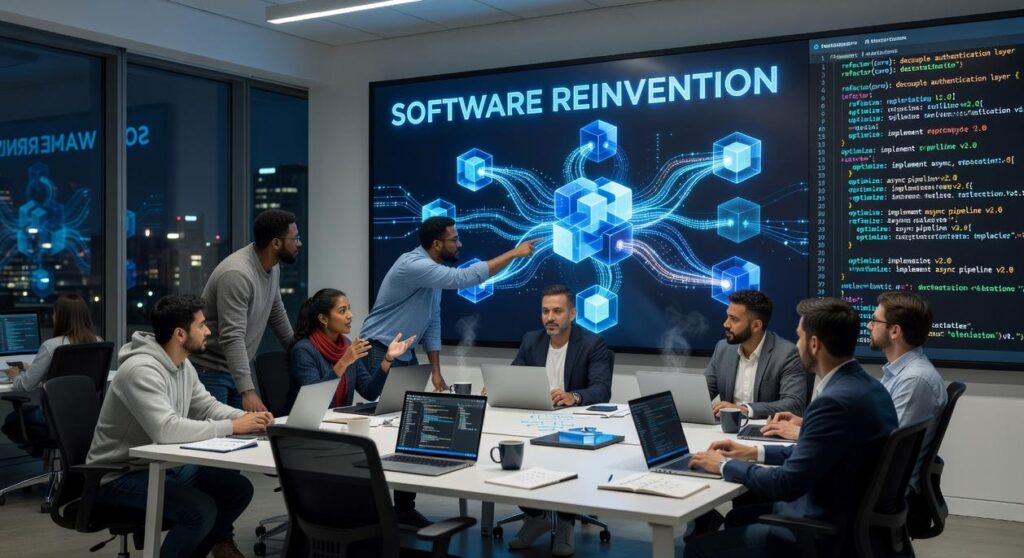
Staying ahead of breakthrough technologies 2026 isn’t just about curiosity — it’s about preparation. Whether you’re a developer, investor, or tech enthusiast, you’re likely searching for clear insights into which innovations will truly reshape industries and which trends are just hype. This article is designed to cut through the noise and focus on the technologies gaining real momentum, from advanced machine learning systems and next-gen app development frameworks to accelerating quantum computing capabilities and their security implications.
We’ve analyzed emerging research, industry reports, patent activity, and insights from leading engineers and technology analysts to ensure the information here reflects where innovation is actually heading. You’ll discover which technologies are moving from experimentation to real-world deployment, what risks they introduce, and how to position yourself to adapt early. If you want a focused, trustworthy breakdown of what’s coming next — and why it matters — you’re in the right place.
Beyond the Hype: The Technologies That Will Actually Define 2026
Forget flashy demos. The real breakthrough technologies 2026 will be the ones quietly shifting budgets, workflows, and daily habits.
First: AI copilots embedded in enterprise software—not chatbots, but task-level automation that cuts operating costs and boosts output (think fewer spreadsheets, more strategy). Second: edge AI chips that process data locally, reducing latency and cloud spend. Third: practical quantum-adjacent security tools, built to counter post-quantum threats before they’re mainstream.
What’s in it for you?
- Lower costs
- Faster product cycles
- Stronger security
Position early, and you build leverage competitors scramble to match.
The Leap to Autonomous AI Agents
Not long ago, chatbots were glorified autocomplete engines. You prompted; they responded. End of story. Now, however, we’re watching the rise of autonomous AI agents—systems that don’t just answer questions but execute multi-step tasks end-to-end. Think planning a three-day trip to Austin during SXSW, booking flights from SFO, reserving a hotel near the Convention Center, adjusting for surge pricing, and keeping within a $2,000 budget—without you micromanaging every click.
Some skeptics argue this is just workflow automation with better branding. In part, they’re right. Robotic Process Automation (RPA) has handled rule-based tasks for years. The difference? Modern agents reason under uncertainty. Thanks to improved Large Language Model (LLM) reasoning, persistent memory (long-term context storage), and tool-use orchestration (API calling, database querying, payment execution), agents can plan, act, observe results, and iterate. That feedback loop is the real leap.
Consequently, app development is shifting. Software is no longer just a dashboard of buttons; it’s becoming an agent-hosting environment. UX teams in Silicon Valley are already rethinking interaction models—less form-filling, more intent declaration. Instead of “click here,” users state goals. The agent navigates the microservices architecture behind the scenes (and yes, your API rate limits suddenly matter a lot more).
Meanwhile, machine learning research is moving away from monolithic models toward smaller, specialized systems working in concert—planner models, retrieval models, executor models. This modular approach improves latency and cost efficiency, especially in edge deployments.
In the broader landscape of breakthrough technologies 2026, autonomous agents stand out—not because they talk better, but because they do better.
Quantum Readiness: The Cryptographic Ticking Clock
A few years ago, I sat in a security briefing where a senior engineer casually said, “When quantum hits, RSA is toast.” The room laughed nervously (the kind of laugh you use when something feels both distant and inevitable). That was the moment the quantum threat stopped feeling theoretical.
The Quantum Threat Defined
Today’s encryption—like RSA (Rivest–Shamir–Adleman, a public-key system securing everything from banking logins to email) and ECC (Elliptic Curve Cryptography, a more compact but similar system)—relies on mathematical problems classical computers struggle to solve. A sufficiently powerful quantum computer, using Shor’s algorithm, could factor large numbers exponentially faster (Shor, 1994). In plain terms: the locks protecting global data could be picked.
Why 2026 Is a Tipping Point
Quantum systems have steadily improved in qubit stability (how long quantum bits hold information) and error correction (methods that reduce computational noise). IBM and Google have both published roadmaps showing rapid scaling (IBM Quantum Roadmap, 2023). Meanwhile, attackers are already using a strategy called “harvest now, decrypt later”—stealing encrypted data today to unlock it once quantum machines mature (U.S. NSA guidance, 2022).
The Race for Post-Quantum Cryptography (PQC)
NIST finalized several PQC standards in 2024, including CRYSTALS-Kyber and Dilithium. Migration isn’t optional for sectors like finance and defense.
- Inventory vulnerable systems
- Test hybrid cryptographic deployments
- Plan phased migration
Emerging Opportunity
Beyond risk, quantum computing is enabling early breakthroughs in:
- Materials science simulations
- Complex logistics optimization
As we approach breakthrough technologies 2026, quantum is shifting from lab curiosity to strategic reality (and this time, the laughter is gone).
Spatial Computing and the Immersive Internet

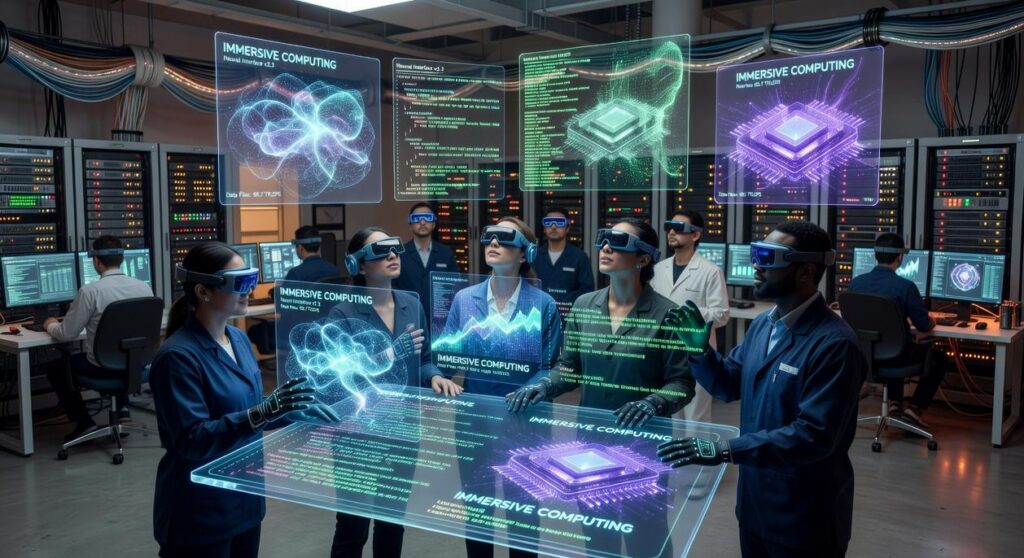
Spatial computing is no longer just about gaming headsets and virtual sword fights. 2026 is shaping up to be the year it moves into REAL WORK. Enterprises are using 3D collaboration spaces for product design, remote maintenance, and complex data visualization. Imagine engineers across three continents manipulating the same holographic prototype in real time (Zoom calls suddenly feel very 2020).
Some skeptics argue it’s still too clunky or expensive for serious adoption. Fair point. First-generation hardware was bulky and costly. But second-generation AR glasses and mixed-reality headsets are lighter, more powerful, and increasingly affordable—driving real enterprise pilots.
If you’re building for this shift, here’s what changes:
- Think in 3D, not 2D. Interfaces rely on gesture, gaze, and voice—not clicks.
- Adopt Universal Scene Description (USD). This open framework enables interoperability across 3D tools and platforms.
- Design for spatial context. Apps must understand room layout, object distance, and user movement.
This is where breakthrough technologies 2026 start to converge. AI agents embedded in spatial systems are becoming “ambient assistants”—perceiving your environment and responding contextually. (Think Jarvis, but enterprise-ready.)
Want to stay ahead? Learn how to track disruptive tech innovations before they go mainstream: https://rcsdassk.com.co/how-to-track-disruptive-tech-innovations-before-they-go-mainstream/
The immersive internet isn’t hype. It’s an interface evolution.
Bio-Convergence: When AI Meets Biology
What if discovering a life-saving drug no longer took 10 years, but 10 months? AI-powered drug discovery uses machine learning models to scan molecular combinations at superhuman speed, pushing the first AI-native therapies into late-stage trials by 2026. Skeptical? Fair. Yet similar systems already outperform traditional screening methods (Nature, 2023).
Now imagine pairing that with affordable genome sequencing. Could AI craft personalized cancer treatments tailored to your DNA? This is where breakthrough technologies 2026 reshape medicine.
- Personalized care at scale
The real question is: are we ready to trust algorithms with our biology? Sound familiar? Or slightly terrifying? That’s
Your Strategic Roadmap for the Next Tech Cycle
We’ve explored autonomous AI, quantum readiness, and the spatial internet.
Now comes the hard part: action.
Understanding trends is easy; rewiring your business isn’t.
Start treating these shifts as immediate priorities.
Here’s what I recommend:
- Audit one core workflow for automation or augmentation.
- Launch a small pilot using breakthrough technologies 2026.
- Invest in upskilling around AI oversight and quantum-safe security.
Don’t wait for certainty. Start with contained experiments, measurable outcomes, and ownership.
Pro tip: allocate a fixed innovation budget before momentum fades.
Identify one process that could transform tomorrow starting today now.
What Comes Next in the Innovation Race
You came here to understand where innovation is heading and how to prepare for the next wave of disruption. Now you have a clearer picture of the forces driving breakthrough technologies 2026—from rapid machine learning evolution to quantum computing risks and next-gen app development strategies.
The real challenge isn’t knowing these trends exist. It’s keeping up before they outpace you.
Emerging tech moves fast. If you’re not actively tracking shifts in AI models, security implications, and scalable development frameworks, you risk falling behind competitors who are already adapting.
Your next step is simple: stay plugged into real-time tech intelligence, monitor innovation signals weekly, and apply what you learn immediately to your products or strategy. Don’t wait for disruption to hit—prepare for it.
If you want clear, actionable alerts on the technologies reshaping industries, start following our updates today. We’re trusted by forward-thinking innovators who rely on timely insights to stay ahead. Get the insights. Apply them fast. Lead the change.
 Norman Liaoctoreno is the kind of writer who genuinely cannot publish something without checking it twice. Maybe three times. They came to app development techniques through years of hands-on work rather than theory, which means the things they writes about — App Development Techniques, Emerging Tech Concepts and Trends, Machine Learning Insights, among other areas — are things they has actually tested, questioned, and revised opinions on more than once.
That shows in the work. Norman's pieces tend to go a level deeper than most. Not in a way that becomes unreadable, but in a way that makes you realize you'd been missing something important. They has a habit of finding the detail that everybody else glosses over and making it the center of the story — which sounds simple, but takes a rare combination of curiosity and patience to pull off consistently. The writing never feels rushed. It feels like someone who sat with the subject long enough to actually understand it.
Outside of specific topics, what Norman cares about most is whether the reader walks away with something useful. Not impressed. Not entertained. Useful. That's a harder bar to clear than it sounds, and they clears it more often than not — which is why readers tend to remember Norman's articles long after they've forgotten the headline.
Norman Liaoctoreno is the kind of writer who genuinely cannot publish something without checking it twice. Maybe three times. They came to app development techniques through years of hands-on work rather than theory, which means the things they writes about — App Development Techniques, Emerging Tech Concepts and Trends, Machine Learning Insights, among other areas — are things they has actually tested, questioned, and revised opinions on more than once.
That shows in the work. Norman's pieces tend to go a level deeper than most. Not in a way that becomes unreadable, but in a way that makes you realize you'd been missing something important. They has a habit of finding the detail that everybody else glosses over and making it the center of the story — which sounds simple, but takes a rare combination of curiosity and patience to pull off consistently. The writing never feels rushed. It feels like someone who sat with the subject long enough to actually understand it.
Outside of specific topics, what Norman cares about most is whether the reader walks away with something useful. Not impressed. Not entertained. Useful. That's a harder bar to clear than it sounds, and they clears it more often than not — which is why readers tend to remember Norman's articles long after they've forgotten the headline.