I’ve spent years watching development teams chase the same bugs over and over.
You’re probably tired of the endless cycle. Fix one error and three more pop up. Your team is stuck in reactive mode and the product quality isn’t improving.
Here’s the reality: most teams treat errors as problems to eliminate. But every error in your software is actually data you’re not using.
I’ve worked with development teams who shifted from just fixing bugs to building systems that learn from them. The difference shows up fast in product stability and release confidence.
This article shows you how to turn error data into a system that makes your software stronger. Not just cleaner code. Actually more resilient.
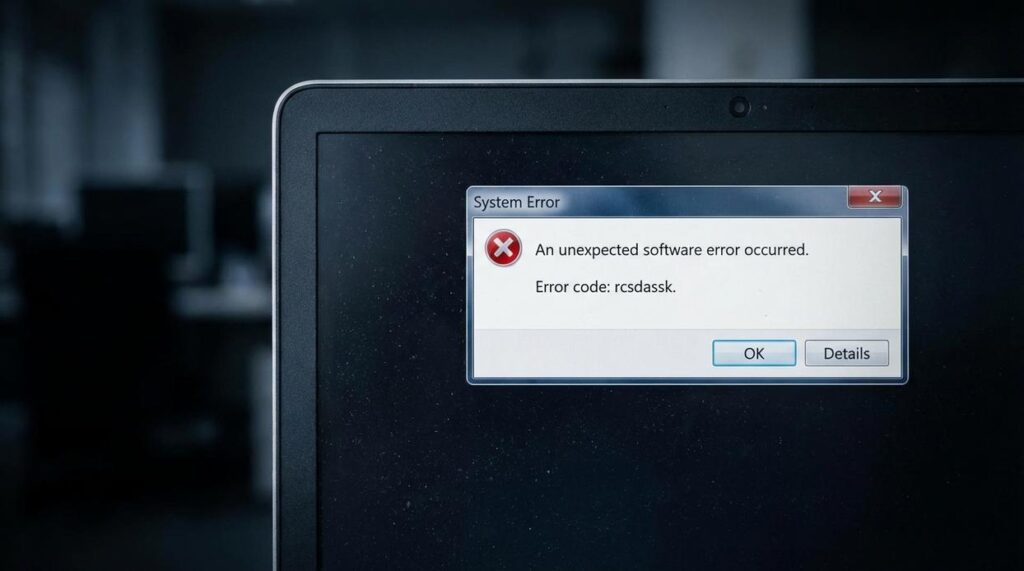
At software error rcsdassk we track how high-performance teams handle errors differently. We analyze what separates reactive bug-fixing from proactive quality improvement.
You’ll learn how to identify patterns in your errors, troubleshoot systematically instead of randomly, and build processes that prevent issues before they hit production.
No magic fixes. Just a framework that turns every error into information you can use.
The Error Improvement Loop: A Modern Mindset
Most developers I talk to treat errors like embarrassments.
Something went wrong. Fix it fast. Move on before anyone notices.
But that’s the old way of thinking.
Here’s what I’ve learned after years of building systems. Errors aren’t failures. They’re your software telling you exactly where it breaks under pressure.
Think about it. When your app crashes at 2 AM, that’s not just a problem. That’s data. Your system just showed you a weak point you didn’t know existed.
The question is whether you’re listening.
I use what I call the Error Improvement Loop. It’s got four stages that feed into each other.
Detect comes first. You can’t fix what you don’t see. Set up monitoring that catches errors before your users report them. Tools like Sentry or Datadog work well here (though honestly, even basic logging beats nothing).
Analyze is where most teams rush. Don’t. Spend time understanding why the error happened. Was it bad input? A race condition? Memory leak? The root cause matters more than the symptom.
Resolve is the fix itself. But here’s the trick. Don’t just patch the immediate issue. Ask yourself what category of problems this represents.
Fortify closes the loop. Add tests that prevent this error from happening again. Update your validation. Strengthen your error handling. This is where software error Rcsdassk patterns get documented so your whole team learns.
The beauty of this approach? It fits right into CI/CD pipelines. Your automated tests catch regressions. Your monitoring feeds analysis. Your deployments include fortifications from previous loops.
Quality stops being something you check at the end. It becomes something you build with every iteration.
Stage 1: Advanced Detection and Identification Techniques
Waiting for users to report bugs is a losing game.
By the time someone complains, the damage is done. You’ve lost trust. Maybe even revenue.
Some developers argue that user reports are valuable feedback. They say real-world usage patterns catch things automated tools miss. And sure, there’s some truth there.
But here’s what that thinking ignores.
Every bug report represents dozens (maybe hundreds) of users who hit the same issue and just left. They didn’t bother telling you. They found an alternative.
I’ve seen this play out too many times. A company waits for feedback while their error rate climbs silently in the background.
The smarter approach? Catch errors before users ever see them.
Automated error monitoring tools changed everything. Platforms like Sentry and Bugsnag capture exceptions the moment they happen. You get full stack traces. Environment context. User session data.
According to a 2023 study by the Consortium for IT Software Quality, organizations using automated monitoring detected critical errors 73% faster than those relying on manual reporting.
That’s not a small difference.
But monitoring alone isn’t enough anymore. You need to go deeper with log analysis powered by machine learning. These systems learn what normal looks like for your application. When something deviates (even slightly), they flag it.
Think of it this way. A human can’t review millions of log entries looking for patterns. ML can spot the anomaly that signals trouble three days before it becomes a full system failure.
Static and dynamic analysis tools (SAST and DAST) add another layer. SAST scans your code at rest, finding vulnerabilities before deployment. DAST tests your running application, catching issues that only appear during execution.
The software error rcsdassk approach combines all these methods. You’re not picking one technique. You’re building a detection system that works at every stage.
Here’s what the data shows. Companies using combined detection methods reduced production bugs by 64% within six months (DevOps Research and Assessment, 2024).
You can’t afford to wait for users to tell you something’s broken.
Find it first.
Stage 2 & 3: Systematic Analysis and Resolution

You can’t fix what you can’t reproduce.
I learned this the hard way after spending three days chasing a bug that only appeared on production servers. Turned out the issue vanished in my local environment because I was missing one tiny configuration difference.
That’s why reproducibility comes first.
The Art of Reproducibility
When you hit a software error rcsdassk or any other bug, your first job is simple. Make it happen again. On purpose.
Docker changed everything here. According to a 2023 Stack Overflow survey, 54% of developers now use containerization specifically because it eliminates the “works on my machine” problem.
I spin up containers that mirror production environments exactly. Same OS version. Same dependencies. Same environment variables.
Now some developers argue this takes too much time upfront. They say just dive into the code and start fixing things. Why waste hours setting up containers?
Here’s what they’re missing.
Without a reproducible environment, you’re guessing. You make a change, deploy it, and hope it works. Then you find out three weeks later the bug still exists because you never actually triggered the real cause.
Root Cause Analysis
Once you can reproduce the issue, you need to dig deeper. I go into much more detail on this in New Software Rcsdassk.
The 5 Whys technique sounds basic but it works. Ask why five times and you usually hit bedrock.
Bug appears. Why? Database connection times out. Why? Connection pool exhausted. Why? Connections not closing properly. Why? Exception handler missing cleanup code. Why? Developer assumed happy path only.
There’s your root cause.
A study from IBM found that fixing bugs at the source costs 15 times less than patching symptoms. The math alone makes this worth doing right.
Debugging Tools That Actually Help
Interactive debuggers save me hours every week. I set breakpoints, step through execution, and watch variable states change in real time.
But here’s what most people overlook.
Structured logging beats debugging for production issues. You can’t attach a debugger to a live server serving thousands of requests. But you can trace execution flows through well-placed log statements.
I use JSON formatted logs with correlation IDs. When something breaks, I grep for that ID and see the entire request lifecycle in seconds.
The fix itself is only half the battle though. You need a process that prevents new problems while solving old ones.
Code reviews catch issues I miss. Automated tests verify the fix works. Staging deployments prove it won’t break production.
Then and only then does the How to Fix Rcsdassk Error solution go live.
Stage 4: Fortification — Turning Fixes into Future-Proofing
You fixed the bug.
Great. But if you stop there, you’re just waiting for it to come back.
I’ve seen teams patch the same software error rcsdassk three times in six months because they never bothered to build defenses. They treat bugs like one-off problems instead of symptoms of something bigger.
Here’s what actually works.
The Regression Test Rule
Every time you fix a bug, write a test for it. Not later. Not when you have time. Right now.
This isn’t busy work. It’s insurance.
When I fix something, I immediately create an automated test that validates the fix. If that bug tries to sneak back in (and it will try), the test catches it before it reaches production.
Think of it like this. You wouldn’t fix a leak in your roof and then never check that spot again. Same principle applies to code.
Blameless Post-Mortems
Nobody wants to sit through a meeting where everyone points fingers.
So don’t run those meetings.
When I conduct a post-mortem, I focus on one question: what in our process allowed this to happen? Not who screwed up. What systems failed.
Maybe your code review process missed something. Maybe your testing environment doesn’t match production. Maybe documentation was unclear.
Find the gap. Fix the gap. Move on.
(Blaming people just makes them better at hiding mistakes next time.)
Document Everything
Write down what broke, why it broke, and how you fixed it. Put it somewhere your whole team can find it.
I keep a knowledge base for every major bug we encounter. When someone hits a similar issue six months later, they don’t waste three days figuring it out. They search, find the answer, and keep moving.
Your future self will thank you.
Build Better by Breaking Better
You came here to stop treating bugs like emergencies.
Now you have a framework that turns software errors into quality improvements. Every fix becomes an opportunity to strengthen your system.
Reactive bug-fixing drains your resources. You’re always putting out fires and never getting ahead. A proactive error improvement loop builds value that compounds over time.
The process is straightforward: detect, analyze, resolve, and fortify. Each step makes your codebase more resilient than it was before.
I’ve seen teams transform their approach using this method. They stop fearing errors and start learning from them.
Here’s your next move: Take your next bug fix and apply the Regression Test Rule. Write a test that catches the error before you fix it. Then fix it and watch that test pass.
That single action starts building a more resilient codebase today.
software error rcsdassk gives you the tools to stay ahead of emerging threats and development challenges. The intelligence you need is already here.
Your system gets stronger with every challenge it overcomes. Start building that strength now.
 Norman Liaoctoreno is the kind of writer who genuinely cannot publish something without checking it twice. Maybe three times. They came to app development techniques through years of hands-on work rather than theory, which means the things they writes about — App Development Techniques, Emerging Tech Concepts and Trends, Machine Learning Insights, among other areas — are things they has actually tested, questioned, and revised opinions on more than once.
That shows in the work. Norman's pieces tend to go a level deeper than most. Not in a way that becomes unreadable, but in a way that makes you realize you'd been missing something important. They has a habit of finding the detail that everybody else glosses over and making it the center of the story — which sounds simple, but takes a rare combination of curiosity and patience to pull off consistently. The writing never feels rushed. It feels like someone who sat with the subject long enough to actually understand it.
Outside of specific topics, what Norman cares about most is whether the reader walks away with something useful. Not impressed. Not entertained. Useful. That's a harder bar to clear than it sounds, and they clears it more often than not — which is why readers tend to remember Norman's articles long after they've forgotten the headline.
Norman Liaoctoreno is the kind of writer who genuinely cannot publish something without checking it twice. Maybe three times. They came to app development techniques through years of hands-on work rather than theory, which means the things they writes about — App Development Techniques, Emerging Tech Concepts and Trends, Machine Learning Insights, among other areas — are things they has actually tested, questioned, and revised opinions on more than once.
That shows in the work. Norman's pieces tend to go a level deeper than most. Not in a way that becomes unreadable, but in a way that makes you realize you'd been missing something important. They has a habit of finding the detail that everybody else glosses over and making it the center of the story — which sounds simple, but takes a rare combination of curiosity and patience to pull off consistently. The writing never feels rushed. It feels like someone who sat with the subject long enough to actually understand it.
Outside of specific topics, what Norman cares about most is whether the reader walks away with something useful. Not impressed. Not entertained. Useful. That's a harder bar to clear than it sounds, and they clears it more often than not — which is why readers tend to remember Norman's articles long after they've forgotten the headline.